Pain in the Sole of Your Foot? The 6 Most Common Causes!
Pain in the sole of your foot can have dozens of causes — but six of them explain the vast majority of complaints. Find out which one matches your pain and what to do about it.
Your feet carry you through thousands of steps every day — until at some point they start to protest. Pain in the sole of the foot is one of the most common physical complaints, and at the same time one of the most confusing: one person feels a nail under the heel, another a burning ball of the foot or tired, aching soles after a day at work. The good news: behind all those different pains there are usually just six common causes — and the location of your pain almost always reveals which one it is. In this article we go through them one by one, so you know what's going on and what to do about it.
Where exactly is your pain?
The underside of your foot can roughly be divided into three zones, and each zone has its own usual suspects:
- Under the heel: think plantar fasciitis and heel spurs — together responsible for most heel pain.
- Under the ball of the foot (forefoot): think metatarsalgia or Morton's neuroma.
- Along the arch or the whole sole: think fallen arches/flat feet, or simply overworked, tired feet.
Below we cover each zone, with the tell-tale signs per cause and a link to our full article about it.
Pain under the heel
1. Plantar fasciitis. The classic: sharp, stabbing pain under the heel with your first steps in the morning, easing after some walking and returning after a long day. The cause is an overloaded plantar fascia — the band of connective tissue under your foot. Recognise this pattern? Read our complete article on plantar fasciitis with exercises and treatment tips.
2. Heel spur. A calcium growth on the heel bone that develops after years of traction from the plantar fascia. The spur itself usually doesn't hurt; the complaints come from the irritated tissue around it. Read all about the difference, symptoms and treatment in our article on heel spurs.
Pain in the ball of the foot
3. Metatarsalgia. Nagging, burning pressure pain under the metatarsal heads, often with the feeling of "a pebble in your shoe" and callus at the pressure spot. The cause is almost always an overloaded or dropped forefoot. Read our article on metatarsalgia for the complete approach.
4. Morton's neuroma. Not pressure pain but nerve pain: burning, electric jolts radiating into your toes, often with tingling or numbness, and typically worse in narrow shoes. Here a small nerve between the metatarsals is pinched. In our article on Morton's neuroma you'll read how to give the nerve room again.
Pain along the arch and the whole sole
5. Fallen arches and flat feet. A nagging, pulling pain along the inside of the arch, often combined with tired feet, and sometimes felt through to the ankles, knees or lower back. The arch absorbs too little, so muscles and ligaments work overtime. Sound familiar? Read our article on flat feet and fallen arches.
6. Overworked, tired feet. No sharp pain in one spot, but burning, aching or "throbbing" soles after long standing or walking — the occupational hazard of everyone with a standing job, and the familiar end to a long city walk. The cause is simply more hours of load than your feet (and your shoes) can handle. If you work on your feet, also read our article on tired feet at work.

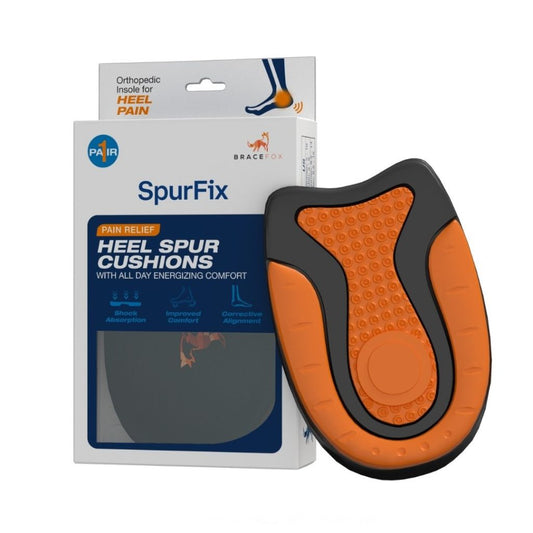
Bracefox® Heel Spur Insoles – ErgoSole
For heel pain: offloads the plantar fascia and cushions every step.
ViewWhat can you do yourself?
Although each cause has its own approach (see the linked articles), the same basics apply to almost all foot sole pain:
- Support your feet: insoles that support the arch and cushion the pressure points relieve almost every form of sole pain — because they distribute the load fairly across the foot again.
- Wear good shoes: firm sole, enough cushioning, wide toe box. Worn-out shoes are an underestimated culprit.
- Pace and vary: alternate long standing with sitting and walking, and build up sport gradually instead of all at once.
- Keep your calves supple: stiff calves increase the pull on both heel and forefoot. Stretching against the wall twice a day for 30 seconds does a lot.
- Roll and cool: rolling your sole over a (frozen) bottle or massage ball relaxes the tissue and calms irritation.
- Watch your weight: every kilo counts double under your feet with every step.
When to see a doctor?
See your doctor if you notice any of these signals:
- the pain started suddenly after a fall, misstep or jump (possibly a fracture or tear);
- your foot is swollen, warm, red or you have a fever;
- you have persistent tingling, numbness or loss of strength;
- the pain is there at rest or at night too;
- you have diabetes and develop foot complaints or small wounds — always have this checked;
- self-care doesn't clearly help after four to six weeks.
Our recommendations for foot sole pain
Whichever of the six causes is at play: the common denominator is that your foot is asking for better support and cushioning. If your pain sits mainly under the heel, the Bracefox® Heel Spur Insoles – ErgoSole are the first choice: they offload the plantar fascia and cushion the heel exactly where it hurts.
Is your pain more spread out, in the ball of your foot, or are you mainly after daily comfort for long days on your feet? Then the Bracefox® Daily Insoles – AeroSoll fit almost any shoe and make the difference between throbbing feet at night and simply carrying on comfortably. Not sure which insole fits your complaint? Our buyer's guide lines up all the options.

Frequently asked questions about foot sole pain
How do I know which cause my foot pain has?
Look at the location and pattern: first-step pain under the heel in the morning fits plantar fasciitis, pressure pain under the ball of the foot fits metatarsalgia, electric jolts into your toes fit Morton's neuroma, and pulling pain along the inner arch fits fallen arches. In doubt, or with several complaints at once? A doctor or podiatrist can make the distinction.
Is foot sole pain dangerous?
Usually not: the vast majority of sole pain is caused by overload and recovers with support, adjusted loading and exercises. Exceptions are sudden pain after an accident, a swollen warm foot, fever, persistent tingling, or foot complaints with diabetes — those warrant a doctor's visit.
Do insoles help with every form of foot pain?
For the six causes in this article, support and cushioning are almost always a core part of the treatment — the right insole distributes pressure and offloads the overloaded structure. The emphasis differs per complaint though: heel cushioning for heel pain, forefoot cushioning for metatarsalgia, arch support for flat feet. So choose an insole that fits your complaint.
Why do my feet hurt mostly in the evening?
After thousands of steps, the muscles and ligaments under your foot are simply fatigued and slightly irritated — by evening you feel the sum of it all, often as burning or throbbing soles. Better cushioning during the day, a short foot massage and putting your legs up work wonders.
Can foot pain come from my back or posture?
It's possible, but the exception. Radiating nerve pain from the lower back (as with sciatica) can run all the way into the foot — that pain usually comes with leg or buttock complaints and tingling. Foot pain that only occurs when standing and walking almost always comes from the foot itself.
How do I prevent the pain from coming back?
Keep maintaining the basics: supportive insoles in the shoes you wear most, replacing shoes on time, keeping your calves supple, building up load calmly and alternating long standing days with movement. Feet that are well supported and strong rarely complain.