All about heel spurs: causes, symptoms, and treatment
Share
Heel spur is more common than you think. One in ten Dutch people will experience it at some point – especially those who stand a lot, are getting older, or exercise intensely. In this guide, we explain what it is, why a good insole makes a difference, and which approach works fastest.
What exactly is a heel spur?
A heel spur is a small, pointed bone outgrowth under or behind the heel bone. It arises because the plantar fascia (the band of tissue under the foot) is under prolonged tension and pulls on its attachment point at the heel. The body reacts by depositing extra calcium at that spot – that is the "spur" visible on an X-ray.
Important to know: it is usually not the spur itself that causes pain, but the inflamed plantar fascia around it (plantar fasciitis). Many people have a heel spur without experiencing any discomfort.
How to recognize a heel spur?
Typical signs
- Stabbing pain with the first steps after getting up
- Pain that decreases after walking, but returns after prolonged sitting
- Pressure pain on the inside or bottom of the heel
- Worsening with standing work or after long walks
- Sometimes a swollen or warm feeling in the heel area
⚠️ When to see a specialist?
If the pain persists for more than 4 weeks, radiates to your calf or forefoot, or if you feel numbness, make an appointment with your GP or podiatrist. For most people: with the right insole and some patience, it clears up within 6–8 weeks.
Common causes
- Prolonged standing or walking work on hard floors
- Overweight — extra pressure on the plantar fascia with every step
- Flat or hollow feet without support
- Incorrect or worn footwear
- Sudden increase in sports intensity (especially running)
- Age — the plantar fascia becomes less elastic from 40+
Treatment options
Heel spur treatment is non-surgical in 90% of cases. The combination of resting, exercising, and supporting works best.
Rest and gradual build-up
Complete inactivity is counterproductive — the plantar fascia then stiffens. It is better to gradually load it: short walks, regularly switching between sitting and standing, and temporarily replacing intense sports with swimming or cycling.
Stretching exercises
Stretching the calf and the sole of the foot relaxes the plantar fascia. A few minutes each morning – before taking the first steps – already makes a difference. Rolling a tennis ball or a frozen water bottle under the foot also works well.
Insoles — how they help
A good medical insole does three things at once: it holds the heel bone in place with a deep heel cup, it absorbs shock with dense EVA cushioning, and it supports the arch so that the plantar fascia is stretched less. This gives the inflamed tissue rest to recover.
When to see a GP or podiatrist?
For persistent pain after 6 weeks of consistent treatment, or for numbness and radiating pain. A podiatrist can perform a gait analysis and, if necessary, custom-make an orthotic. In cases of chronic complaints, injections or, in rare cases, surgery are options.
Which Bracefox insole is suitable for heel spur?
Two options, depending on the severity of your complaints:
- ErgoSole orange — for incipient or mild heel spur. Deepened 7mm heel cup, medical EVA foam, breathable top layer. The most purchased option and sufficient for most people.
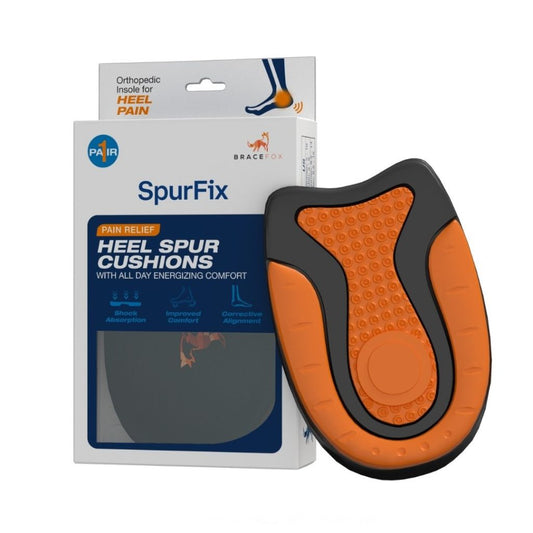
- SpurFix — for persistent or severe complaints. Even deeper heel cup (9mm) plus a separate gel insert that absorbs peak pressure under the heel bone. Recommended for chronic pain.
Frequently asked questions about heel spurs
How long does it take for a heel spur to disappear?
With consistent treatment (insole + exercises + controlled loading), the symptoms usually disappear within 6–8 weeks. In chronic cases, it can take longer. The spur itself often remains, but the pain goes away.
Can I continue to exercise with a heel spur?
Yes, but no high-impact sports (running, jumping, football) during the acute phase. Swimming, cycling, and strength training without stressing the foot are fine. Gradually build up again as the pain subsides.
Does a night splint help?
For some people, yes. A splint keeps the foot stretched at night, which reduces shortening of the plantar fascia. Most valuable for people who primarily experience pain in the morning. Combine with a day insole for the best effect.
What is the difference between heel spur and plantar fasciitis?
Plantar fasciitis is the inflammation of the plantar fascia. A heel spur is the bone outgrowth that can develop underneath it. They often go together, but you can have fasciitis without a spur and a spur without pain.
Can I prevent heel spurs?
Not always, but you can reduce the risk: wear shoes with good cushioning and arch support, avoid prolonged barefoot walking on hard floors, maintain a healthy weight, and gradually increase sports intensity (10% rule per week).