


What to expect
Your recovery, step by step
Bracefox users experience a clear decrease in complaints in the first few weeks. Here's what most of them feel.
-
First week
Stabbing morning pain subsides
The extra-deep heel cup keeps the heel's fat pad in place. You'll feel lighter from the very first steps in the morning.
-
Week 2–3
Continuous drainage of the calcaneus
The plantar fascia rests. Walking distances increase without the pain returning.
Step 2 Often less pain when walking -
Month 1
Background complaints
Worn consistently every day, many people find their heel spur complaints move further into the background.
Step 3 More comfort in everyday walking
SpurFix in detail
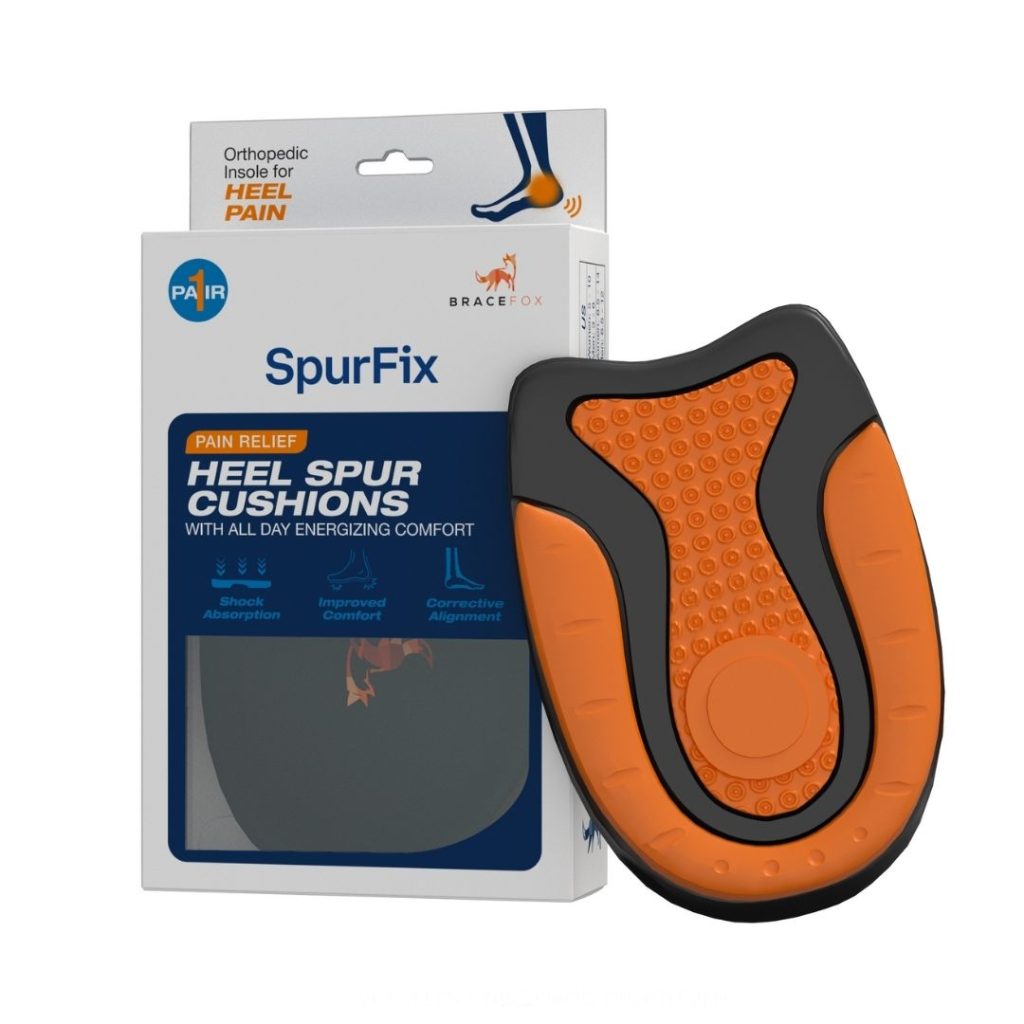
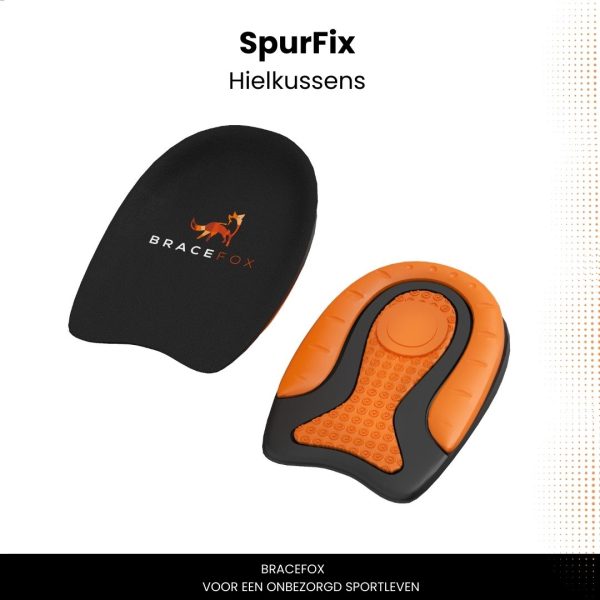
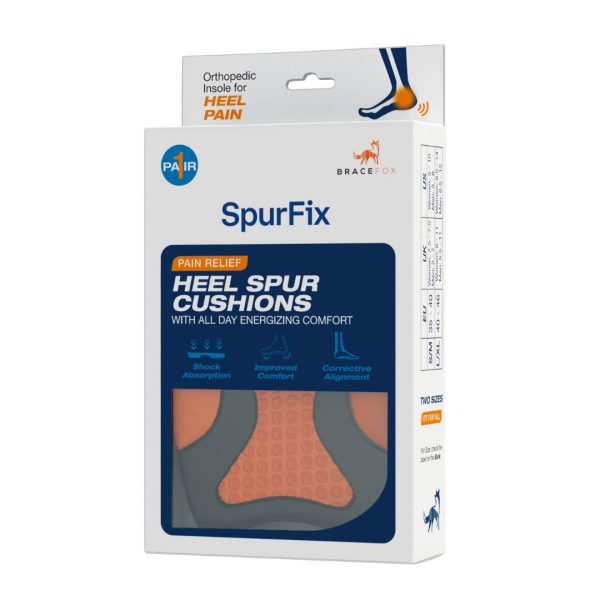
Specifically for heel spurs
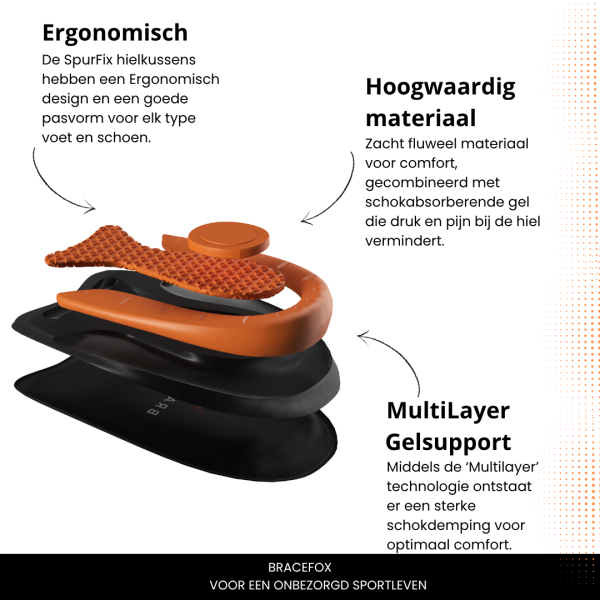
Each layer has a purpose. Here's what makes the sole so effective.

-
Extra-deep heel cup (9mm)
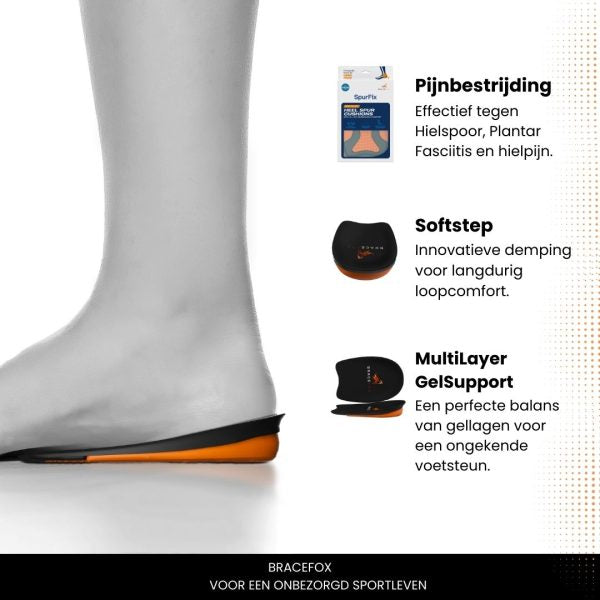
Deepest in the Bracefox line. Keeps the heel fat pad centered under the heel bone.
-
Dual-density EVA
Soft impact zone in the heel, firm arch support in the forefoot. Best of both worlds.
-
Anti-shock heel pad
Additional gel insert in the heel area absorbs peak load upon landing. Reduces pressure on the heel spur.
-
Silent operation
Shock-absorbing without a rebound sensation. Ideal for long days on hard floors.
Frequently asked questions
SpurFix — what you need to know
Answers to the most frequently asked questions about this product.
What is the difference between ErgoSole and SpurFix?
The ErgoSole is a general medical insole for heel spurs and plantar fasciitis. The SpurFix has an even deeper heel cup (9mm) and a separate gel insert specifically for the heel area — intended for people with persistent or severe heel spur complaints.
Does SpurFix work for chronic heel spur?
Yes, designed precisely for that. The combination of a deep heel cup and anti-shock pad relieves the heel bone and allows the tissue to recover. Expect a noticeable reduction within 2–4 weeks, and usually stabilization after 2 months.
Can I combine physiotherapy and SpurFix?
Highly recommended. Physio focuses on flexibility and muscles around the foot; SpurFix provides structural relief with every step. Together, they work faster than separately.
In which shoes does SpurFix work best?
In shoes with sufficient depth and a firm heel counter: sneakers, hiking boots, work shoes. Avoid very flat slip-on shoes — these do not provide enough support for the heel cup.
How long to wear each day?
Build up use as with any new insole: approximately 2 hours on day 1, then one hour longer each time. From day 7–10, you can wear them all day.
What if it feels uncomfortable for the first few days?
A little pressure on the arch or heel is normal—your plantar fascia is just getting used to a different use. Reduce the wear time by a few hours and build up more slowly. Persistent pain after a week is a sign to consult a podiatrist.